
Improving onboarding confidence and subscription growth for new creators
Cricut is a hardware and software platform for creators, with a large portion of revenue coming from its Access subscription. Although machine sales were strong, multiple signals showed that new customers were struggling to get started.
Customer frustration was surfacing across:
These signals pointed to a clear problem: many new users felt intimidated early on and were not building enough confidence to continue.
The team needed to understand why new customers were failing to activate and use their machines, and how onboarding could better support beginners.
In particular, we needed to:
I led a 16-week participatory research effort, working closely with product and design to investigate the problem and shape onboarding improvements in Cricut's Design Space software.
I was responsible for:
Beginners weren't failing because the product was broken. They struggled because they didn't feel like Cricut was built with beginners in mind.
When users were asked about their experience level and goals, they felt supported rather than overwhelmed. This simple acknowledgment helped users feel more confident from the start.
When beginners were dropped directly into the full product, many became overwhelmed and abandoned the experience.
Guided learning plans helped users stay focused long enough to build basic skills. Once they had early success, they felt more comfortable exploring on their own.
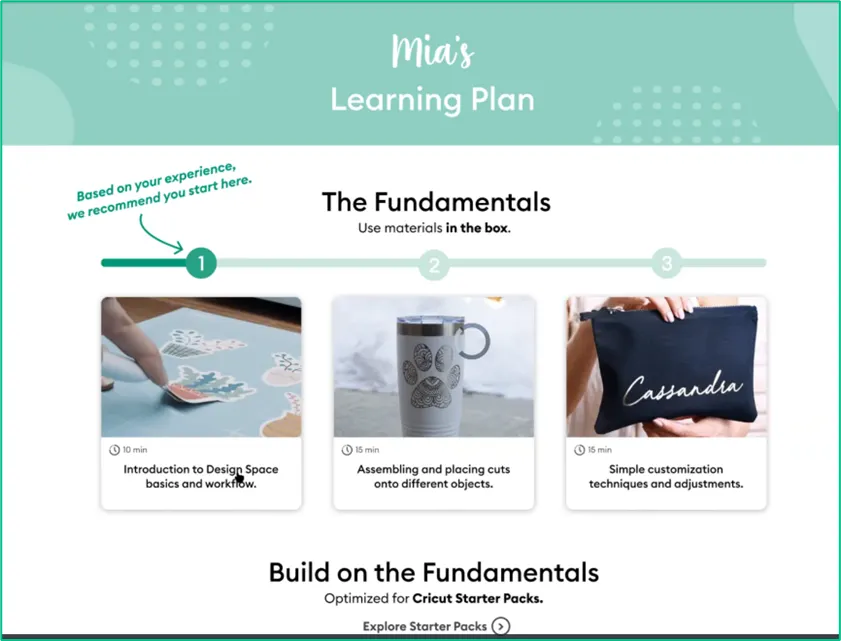
Users were more open to the Access subscription after they had experienced small wins and felt capable using their machine. Introducing the subscription later in onboarding made it feel like a natural next step, rather than a barrier to getting started.
Research findings were shared continuously, allowing the team to iterate quickly and address issues as they emerged.
The participatory research approach used here was later applied to other Cricut initiatives.
This work shows how research can:
It also demonstrates the value of embedding research into ongoing product development, rather than waiting for problems to escalate.